
2026 On-Page SEO Checklist: Tags, Structure & Beyond
TLDR
- On-page SEO in 2026 goes beyond meta tags
- It combines HTML structure, content clarity, and performance signals
- Core Web Vitals and mobile-first design are critical
- A structured checklist ensures consistent optimization
- Proper implementation improves rankings, indexing, and user experience
Introduction
On-page SEO has evolved significantly. It is no longer limited to adding keywords in title tags or writing meta descriptions. Search engines now evaluate pages based on structure, performance, and how well content satisfies user intent.
Many websites still rely on outdated checklists that focus only on basic tags. This leads to missed opportunities and poor rankings. A modern approach requires combining technical implementation with content strategy.
This guide provides a complete on-page SEO checklist for 2026. It is designed for developers and SEO professionals who want to build pages that are technically sound, fast, and aligned with search engine expectations.
What Has Changed in On-Page SEO for 2026
Search engines now evaluate pages holistically. This means they look at multiple factors together rather than isolated elements.
Key changes include:
- Increased focus on page experience and Core Web Vitals
- Better understanding of content meaning through entities and context
- Strong emphasis on mobile-first indexing
- Higher importance of structured data
According to Google Search Central, content quality and page structure are essential for ranking. This means your HTML, content, and performance must work together.
Modern SEO is about clarity. Your page must clearly communicate what it is about, load quickly, and provide a smooth user experience.
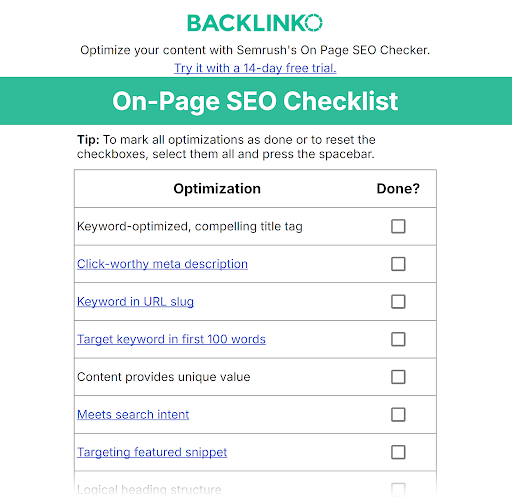
The Complete On-Page SEO Checklist
1. Title Tag Optimization
The title tag remains one of the strongest ranking signals.
Best practices:
- Include your primary keyword naturally
- Keep length within 50 to 60 characters
- Make it compelling for users
Example structure:
<title>On-Page SEO Checklist 2026 | Complete Guide</title>
2. Meta Description Optimization
Meta descriptions do not directly affect rankings but improve click-through rate.
Best practices:
- Write clear and engaging descriptions
- Include keywords naturally
- Keep length around 150 to 155 characters
3. Proper Heading Structure (H1–H6)
Headings define your content hierarchy.
Implementation tips:
- Use only one H1 per page
- Structure content logically with H2 and H3
- Include keywords where relevant
Example:
<h1>Main Topic</h1>
<h2>Subtopic</h2>
<h3>Detail</h3>
4. URL Structure Optimization
Clean URLs improve usability and SEO.
Best practices:
- Keep URLs short and descriptive
- Include primary keywords
- Avoid unnecessary parameters
Example:
/on-page-seo-checklist-2026
5. Image Optimization
Images affect both performance and accessibility.
Checklist:
- Use descriptive alt text
- Compress images for faster loading
- Use modern formats like WebP
Example:
<img src=”seo-checklist.webp” alt=”on-page SEO checklist 2026″>
6. Internal Linking Structure
Internal links help search engines understand your site.
Best practices:
- Link to relevant pages naturally
- Use descriptive anchor text
- Maintain logical linking structure
You can also explore our SEO Services to understand how internal linking improves authority flow.
7. Content Optimization
Content must align with search intent.
Focus on:
- Answering user questions clearly
- Using relevant keywords naturally
- Providing depth and value
Google’s helpful content system rewards content that is written for users, not search engines.
8. Mobile-Friendliness
Mobile-first indexing means your mobile version is the primary version.
Ensure:
- Responsive design
- Readable text without zooming
- Easy navigation on small screens
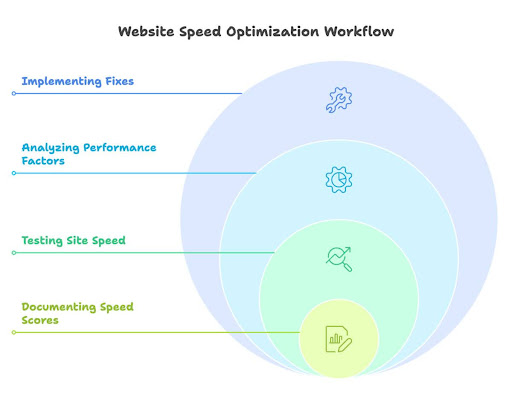
9. Page Speed and Core Web Vitals
Performance is a ranking factor.
Core Web Vitals include:
- Largest Contentful Paint
- First Input Delay
- Cumulative Layout Shift
Optimizing these improves both rankings and user experience.
10. Structured Data (Schema Markup)
Structured data helps search engines understand your content.
Common types:
- Article schema
- FAQ schema
- Product schema
Implementation improves visibility in search results.
11. Indexability and Crawlability
Your page must be accessible to search engines.
Checklist:
- Ensure pages are not blocked by robots.txt
- Use proper sitemap
- Check indexing status in Search Console
12. Canonical Tags and Duplicate Content
Duplicate content can confuse search engines.
Solution:
- Use canonical tags to indicate the preferred version
Example:
<link rel=”canonical” href=”https://example.com/page”>
Common On-Page SEO Mistakes to Avoid
Many websites struggle due to simple mistakes.
Common issues include:
- Missing or duplicate title tags
- Poor heading structure
- Slow loading pages
- Ignoring mobile optimization
- Weak internal linking
These mistakes reduce your chances of ranking and create a poor user experience.
Quick Audit Checklist
Use this quick checklist for implementation:
- Title tag optimized
- Meta description written
- Proper heading structure used
- URL is clean and keyword-focused
- Images are optimized
- Internal links added
- Content matches intent
- Mobile-friendly design
- Page speed optimized
- Structured data implemented
- Page is indexable
- Canonical tags set
If you want a ready-to-use version, download the complete on-page SEO checklist and apply it instantly.
FAQ
What is on-page SEO?
On-page SEO refers to optimizing elements within a webpage to improve its visibility in search engines. This includes content, HTML structure, meta tags, and performance factors. It ensures that search engines can understand and rank your page effectively.
What are SEO tags?
SEO tags are HTML elements such as title tags, meta descriptions, and heading tags. They help define the structure and meaning of your content for search engines and users.
How often should I audit on-page SEO?
You should audit on-page SEO regularly, especially after major updates or content changes. A monthly or quarterly audit helps identify issues and maintain performance.
Do meta tags still matter in 2026?
Yes, meta tags still matter, especially title tags and meta descriptions. While they are not the only ranking factors, they play an important role in visibility and click-through rates.
What is the most important on-page factor?
There is no single factor, but content quality combined with proper structure and performance is the most important. All elements must work together for optimal results.
Conclusion
On-page SEO in 2026 requires a holistic approach. It is not enough to optimize individual elements in isolation. Your content, structure, and performance must work together.
By following a structured checklist, you can ensure consistency and avoid common mistakes. This improves your chances of ranking higher and delivering a better user experience.
The key is implementation. Small improvements across multiple areas create significant results over time.
Download the complete on-page SEO checklist today and start optimizing your website with a clear and structured approach.
“At Optimize With Sanwal, we combine human insight with AI-driven strategies to help businesses grow smarter and faster. You can explore these ideas further in our eBook When AI Becomes the Interface, which shows how content can align with both user needs and AI understanding.”
Disclaimer
All information published on Optimize With Sanwal is provided for general guidance only. Users must obtain every SEO tool, AI tool, or related subscription directly from the official provider’s website. Pricing, regional charges, and subscription variations are determined solely by the respective companies, and Optimize With Sanwal holds no liability for any discrepancies, losses, billing issues, or service-related problems. We do not control or influence pricing in any country. Users are fully responsible for verifying all details from the original source before completing any purchase.
About the Author
I’m Sanwal Zia, an SEO strategist with more than six years of experience helping businesses grow through smart and practical search strategies. I created Optimize With Sanwal to share honest insights, tool breakdowns, and real guidance for anyone looking to improve their digital presence. You can connect with me on YouTube, LinkedIn , Facebook, Instagram , or visit my website to explore more of my work.